Common Kettlebell Swing Mistakes and How to Fix Them
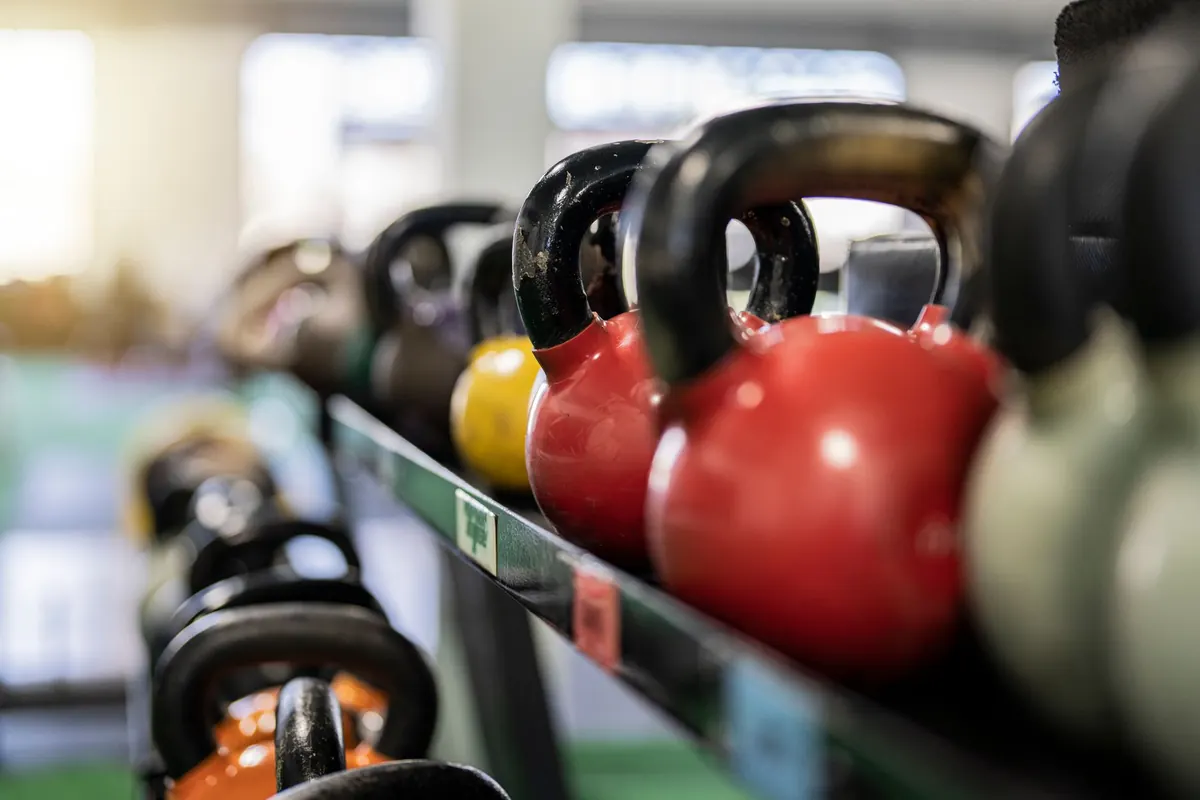
The kettlebell swing looks like the simplest movement in the gym. Then you watch a dozen people do it and see how much can go wrong: the bell drifts overhead, the lower back rounds, and the shoulders burn out after ten reps while the glutes stay asleep.
Almost every swing fault traces back to one of three areas — how you hinge, how you hold the bell, and when you snap your hips. Get those right, and the swing becomes quiet, powerful, and repeatable for hundreds of reps. Here are the mistakes that show up most often, with fixes you can try in your next session.
The swing is a hip hinge, not a squat. If your knees slide forward and your chest stays upright as you descend, the bell ends up swinging between your knees and your spine carries the load your glutes should be handling.
You can spot it easily: shins stay vertical, hips drop low, the bell knocks into your thighs, and your lower back feels tired long before your hamstrings do.
Practise the wall hinge. Stand with your back about a foot from a wall, feet hip-width apart, knees soft. Push your hips straight back until your glutes tap the wall, keeping your chest tall and your spine neutral. Stand up by squeezing your glutes rather than leaning forward. Do ten slow reps, then take that exact movement to a light bell.
Carry one cue into every swing: hips back, chest proud, bell travelling past the inner thighs. If your knees bend more than your hips travel, you've turned the hinge into a squat.
In a swing, your arms are ropes. They connect your hands to your hips and do nothing else. If your front delts are on fire by rep fifteen, or the bell only reaches chest height when you pull it there, you're muscling the reps instead of swinging them.
The signs are consistent: elbows bend at the top, shoulders shrug toward your ears, and the bell wobbles because your arms are steering it.
Take the arms out of the equation. Practise the hike — hinge, hike the bell back between your legs the way you'd snap a football, then snap your hips and let the bell float up on its own. Or do a set with your hands clasped and no bell at all, feeling the snap come from your glutes. Bell height is a result of hip speed, not shoulder effort. If it isn't floating to chest height, you need more snap, not more arm.
Grip errors rarely hurt during the set. They quietly drain your forearms, irritate your elbows, and make the bell feel heavier than it is. Two versions show up constantly: squeezing the handle as though it might escape, and holding the bell too deep in the palm so it slaps your wrist at the top.
Set the handle in your fingers, roughly where your fingers meet your palm, with the thumb wrapped loosely and the wrist straight. Grip firmly enough to keep control and no more. A tense forearm pulls your shoulder forward and shortens your hinge.
Drill: one-arm swings. They expose an over-tight grip within a few reps, because you get instant feedback the moment the bell starts to rotate. A thicker handle, or a small towel wrapped over the handle at a lighter weight, forces the same precision.
Timing is where most swings fall apart, and it usually looks like one of two things:
Wait for the bell to fall past your knees, then sit your hips back and let it pull you into the hinge. Think of playing chicken with it: you move last.
Dead-stop swings. Swing once, let the bell settle on the ground, reset your setup completely, then swing again. Removing momentum forces honest timing. When that feels smooth, try hike-and-hold reps: hike the bell back, hold the hinged position for two seconds, then snap and swing. It teaches you where the bottom of the swing actually is.
Breathing is part of timing too. Exhale sharply as you snap, inhale as the bell falls. Holding your breath through the whole set makes everything tense and rushed.
Don't forget the top position. Stand tall and stop — ribs stacked over pelvis, glutes and quads tight. If you're leaning back to get the bell higher, that backbend is a cheat. You need more hip snap, not more spine.
Use this as a ten-minute warm-up before swings, or as a short stand-alone session twice a week.
Keep the volume light and the reps crisp. If a rep looks sloppy, end the set there. Clean patterns come before heavy weight.
Film a set from the side, with your feet, hips, and hands in frame, and watch it back at half speed. From that angle, a good swing looks like a door swinging on a hinge: hips travel back, chest stays tall, and the bell stays close to the body. If you see your knees shooting forward or your back rounding, you know which drill to return to.
Pick one or two cues and repeat them for a few weeks. When they feel automatic, add weight rather than reps. A heavier bell punishes bad timing immediately, so most people are better off owning the pattern with a bell they can hike back and snap without their form breaking. If in doubt, go lighter.
If you have a history of back, hip, or shoulder trouble, or you're new to loaded training, get a qualified coach or physiotherapist to watch you move before you push volume. A couple of sessions with eyes on your hinge beats months of guessing.
Photo: Jason Morrison / Pexels
Previous Post
The 4-Week Beginner Strength Workout Plan for New Gym-Goers
Next Post
How to Train for a Local 5K: An 8-Week Beginner Running Plan